
KPT Laboratories
Renewable Energy Sources Laboratory
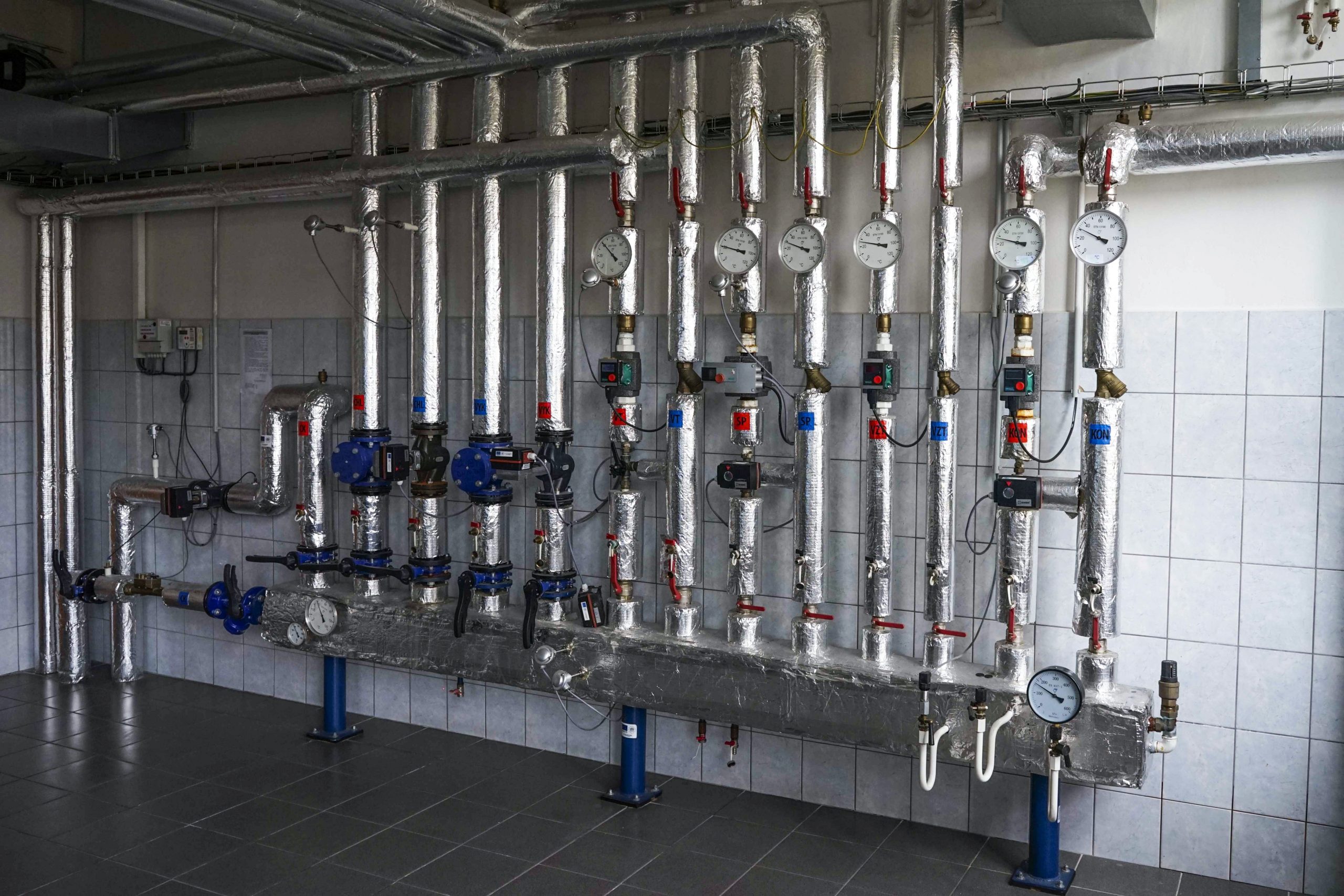
The Renewable Energy Sources Laboratory is equipped with state-of-the-art technology that enables research and teaching on methods of heat generation and distribution, as well as gas and fluid flow.
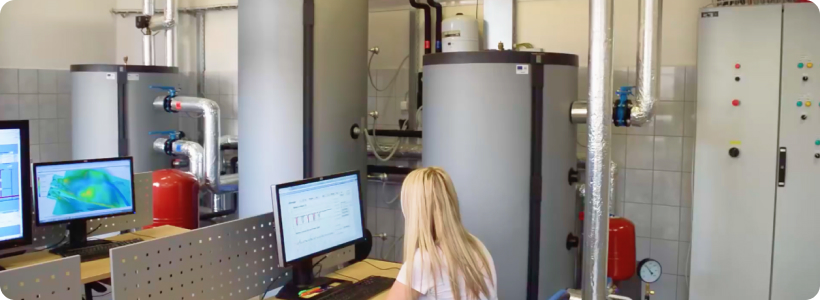
The laboratory features a condensing boiler, which students can explore to gain theoretical knowledge about calculating the efficiency of a condensing boiler, its design, the principle of utilizing condensation heat, and a comparison of this type of boiler with conventional boilers. The renewable energy laboratories are equipped with state-of-the-art equipment. Students use this equipment to test their theoretical knowledge. The laboratory is equipped with devices capable of generating heat from renewable energy sources, such as photovoltaic panels, solar panels, a bivalent air-to-water heat pump, a heat recovery unit, and a wood chip boiler.
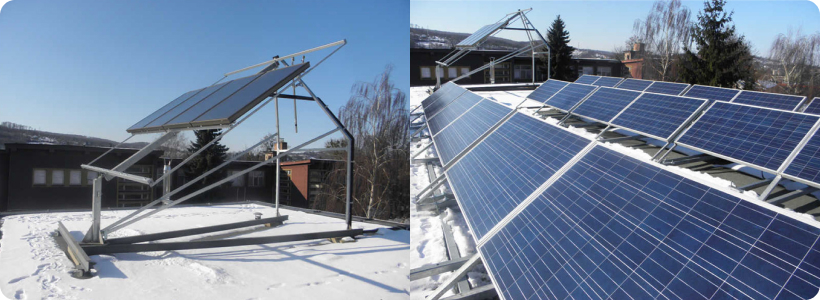
The roof of the KPT building is equipped with solar collectors mounted on a tracking system for flat-plate collectors that follows the sun’s path, thereby capturing a greater amount of solar radiation. In addition to these collectors, the roof is equipped with photovoltaic solar panels with a total output of 4 kW. Since this system is not connected to any other electrical grid at any point, it is an off-grid photovoltaic system. Thus, the electrical energy generated by the panels is stored in batteries and can be used even when the panels are not exposed to sunlight. Students use the stored electrical energy in the batteries to power devices connected to the laboratory benches.
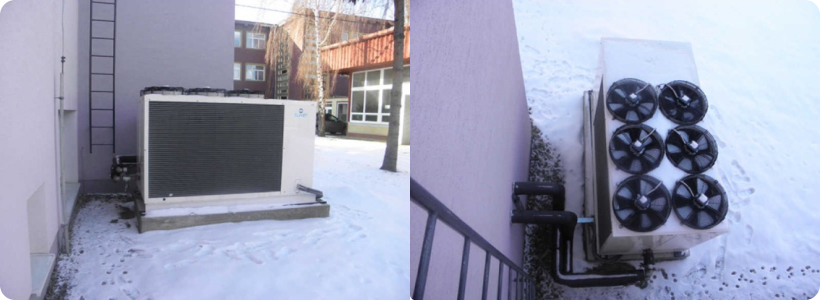
Another major benefit for students is the presence of a reversible heat pump, which allows them to gain the necessary knowledge about these devices, their operation, and the use of energy generated by the heat pump for heating or cooling a building.
The laboratory is equipped with various heating appliances that enable the implementation of specialized methods for heating or cooling industrial and municipal buildings. Among these appliances are ceiling cooling panels and floor convectors, which utilize the cooling produced by a reversible heat pump. These components can be interconnected and are equipped with state-of-the-art measurement and control technology based on Siemens systems. Students can configure various system control structures and parameters, as well as create a monitoring environment for displaying measured data.
Combustion Process Analysis Laboratory
Through laboratory exercises, students gain an understanding of how to determine the basic parameters of solid fuels. During seminar projects, they learn to evaluate the moisture content, calorific value, and heat of combustion of solid fuels (wood chips, coal, etc.). Part of the laboratory exercises involves measuring the efficiency of a wood chip boiler as a function of fuel quality. Students are able to determine all of these parameters using the equipment in the laboratory. They will gain not only theoretical knowledge of the subject matter, but also practical skills in operating laboratory equipment and evaluating the samples under investigation.
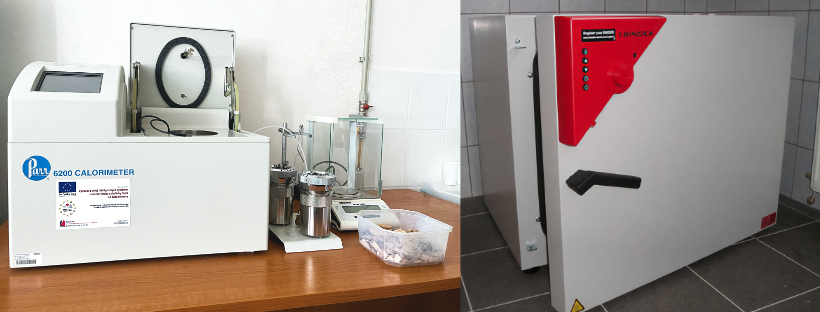
The practical exercises focus on teaching the design of heating systems, measuring the amount of pollutants emitted into the air from real-world pollution sources, measuring and evaluating concentrations of gaseous and particulate pollutants, and designing equipment for continuous air pollution monitoring. For these purposes, the laboratory is equipped with Testo 360 continuous flue gas analyzers and a Testo 350S portable flue gas analyzer.
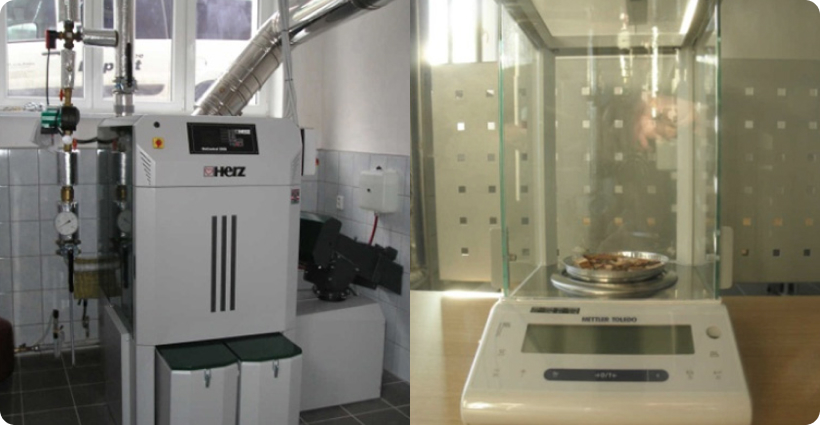
The wood chip boiler includes a fuel storage bin located in an adjacent room, which is equipped with a single spring-loaded agitator—a versatile solution suitable for both wood chips and pellets. Students have the opportunity to observe in practice the automatic operation and transport of fuel from the storage area to the boiler, which is carried out via a screw conveyor.
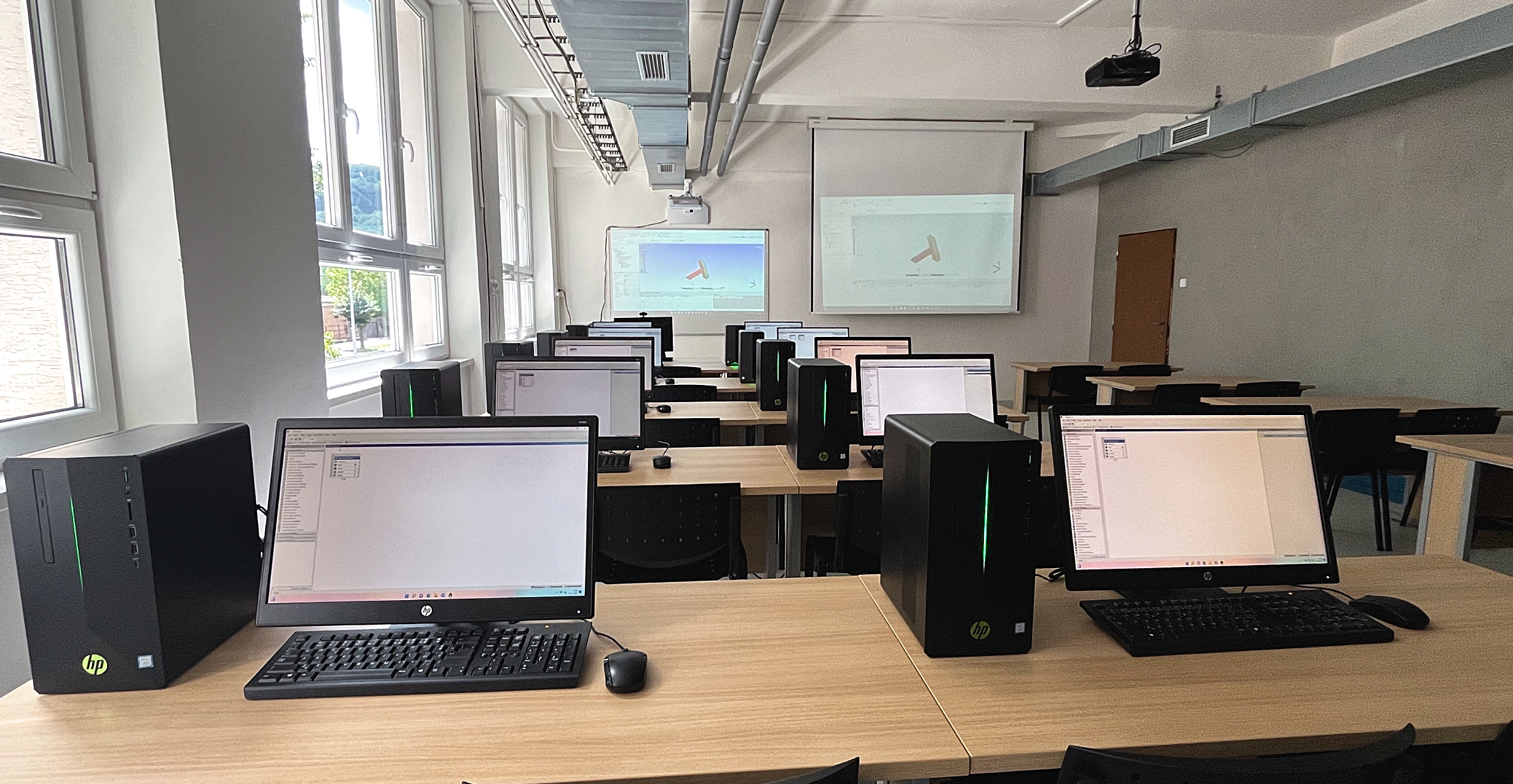
Laboratory for Computer Simulations and Analyses of Thermal and Process Engineering
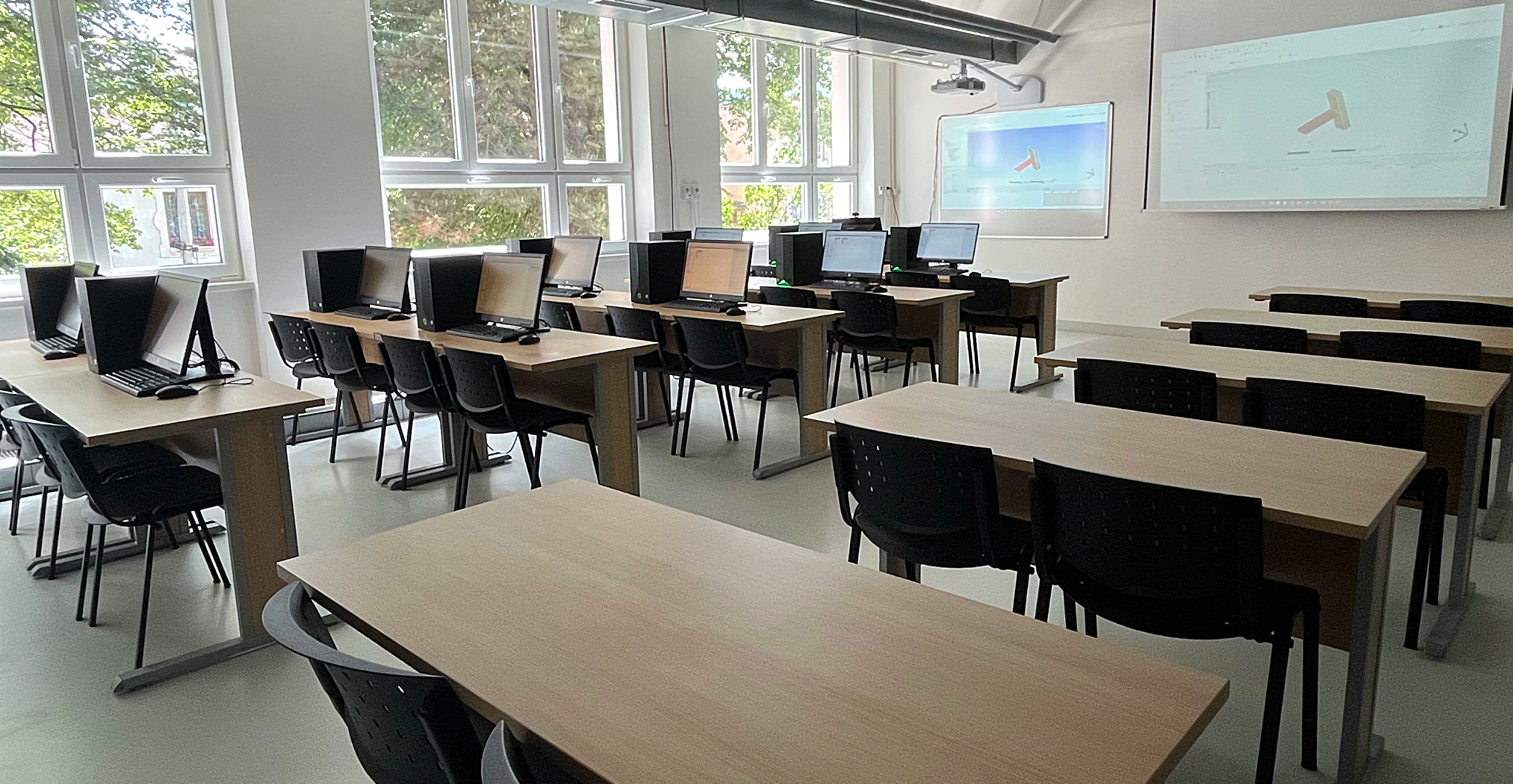
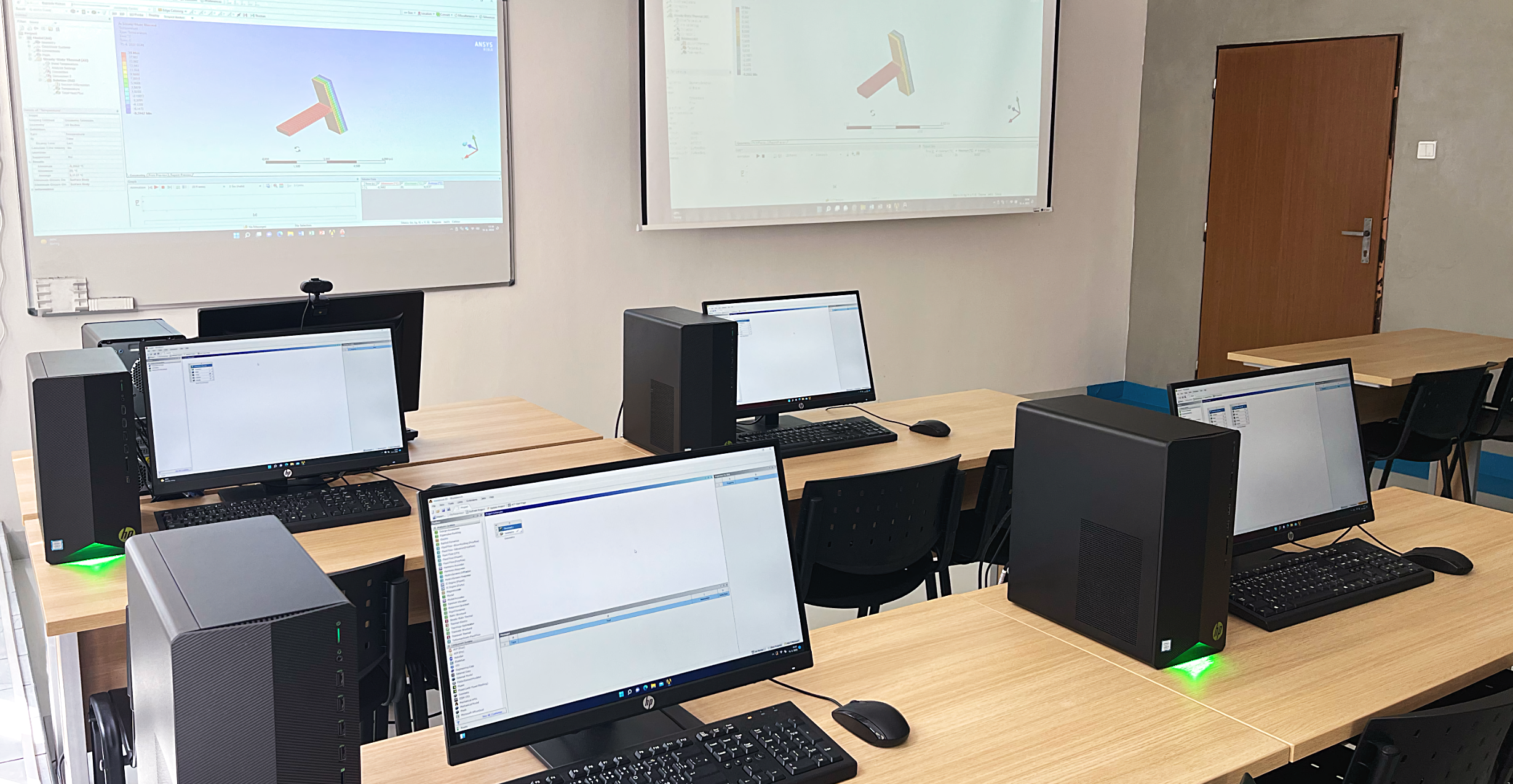
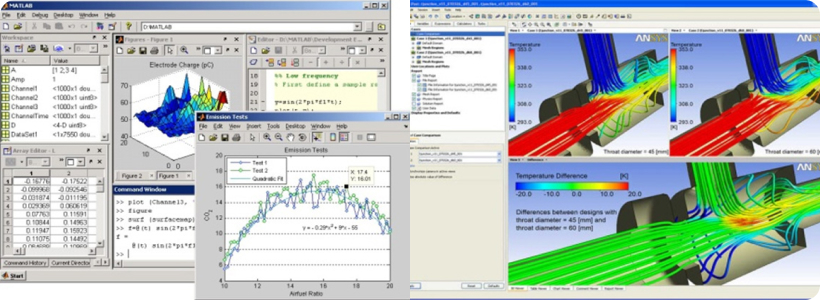
Students can acquire knowledge of methods for calculating heat loss in buildings, the design of heat sources, and basic knowledge of the types and equipment of boiler rooms and heating plants, as well as fuels and combustion. Students will acquire some of this knowledge both theoretically and practically through instruction in high-quality software programs Ansys, PROTECH, and TechCON, which are among the most widely used software packages in the fields of heat loss calculation, heating system design, hydraulic balancing of systems, design of heating or cooling sources, chimney design, etc.
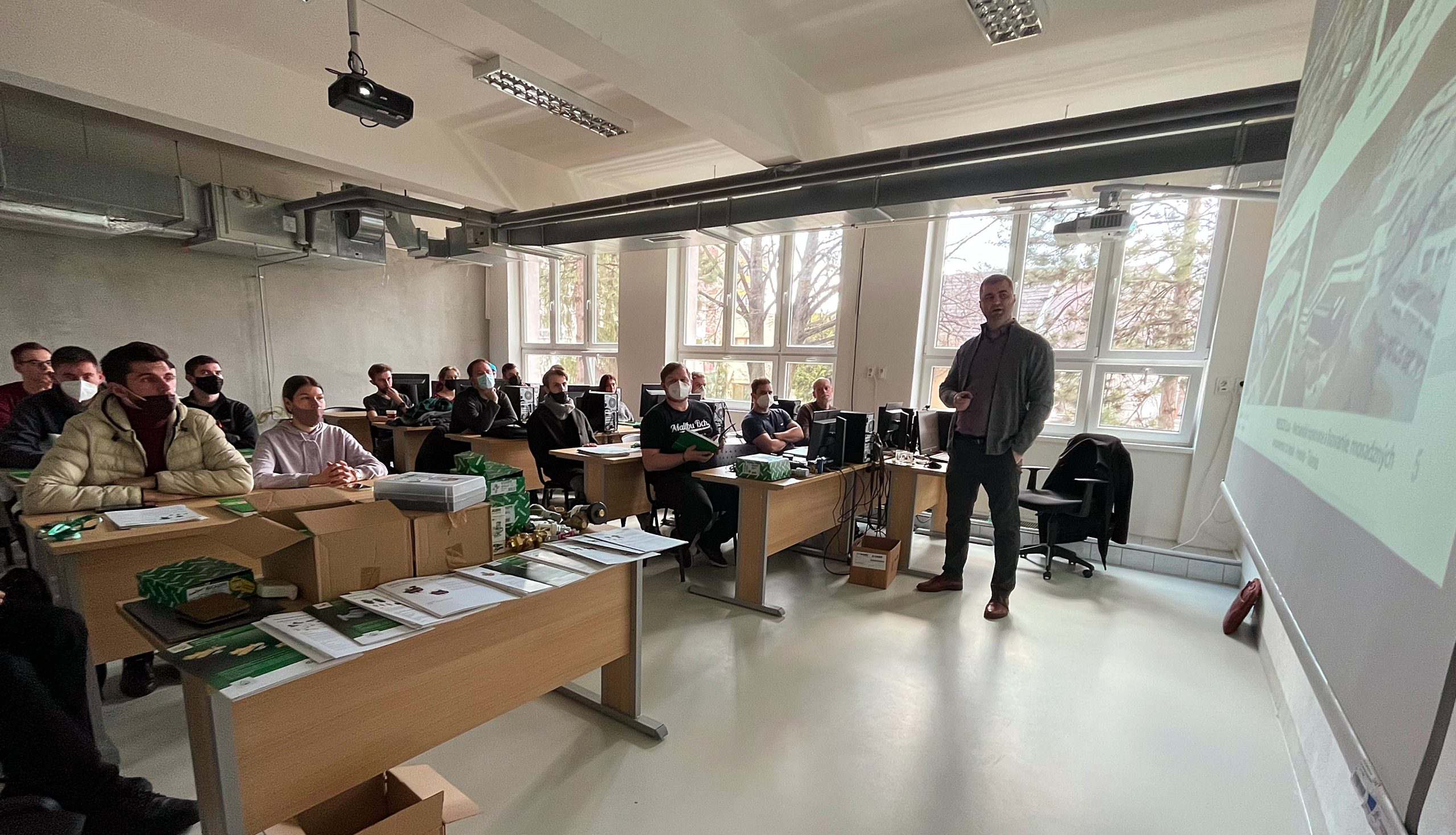
In addition to serving as teaching aids, all of these devices also fulfill an important operational function, thanks to which the school saves a considerable amount on its operating costs for heat generation, hot water preparation, and electricity consumption. For the laboratory to be fully functional and utilized to the greatest extent possible, teachers must also have a thorough understanding of this technology. That is why this topic is addressed primarily by teachers who encounter it in practice as well, thanks to which they can explain the topic to students not only from a theoretical but also from a practical perspective, using concrete examples.
Kontakt
Katedra procesnej techniky
Fakulta výrobných technológií TU v Košiciach so sídlom v Prešove